
Why a Dentist Is Talking About Lines Around Your Mouth

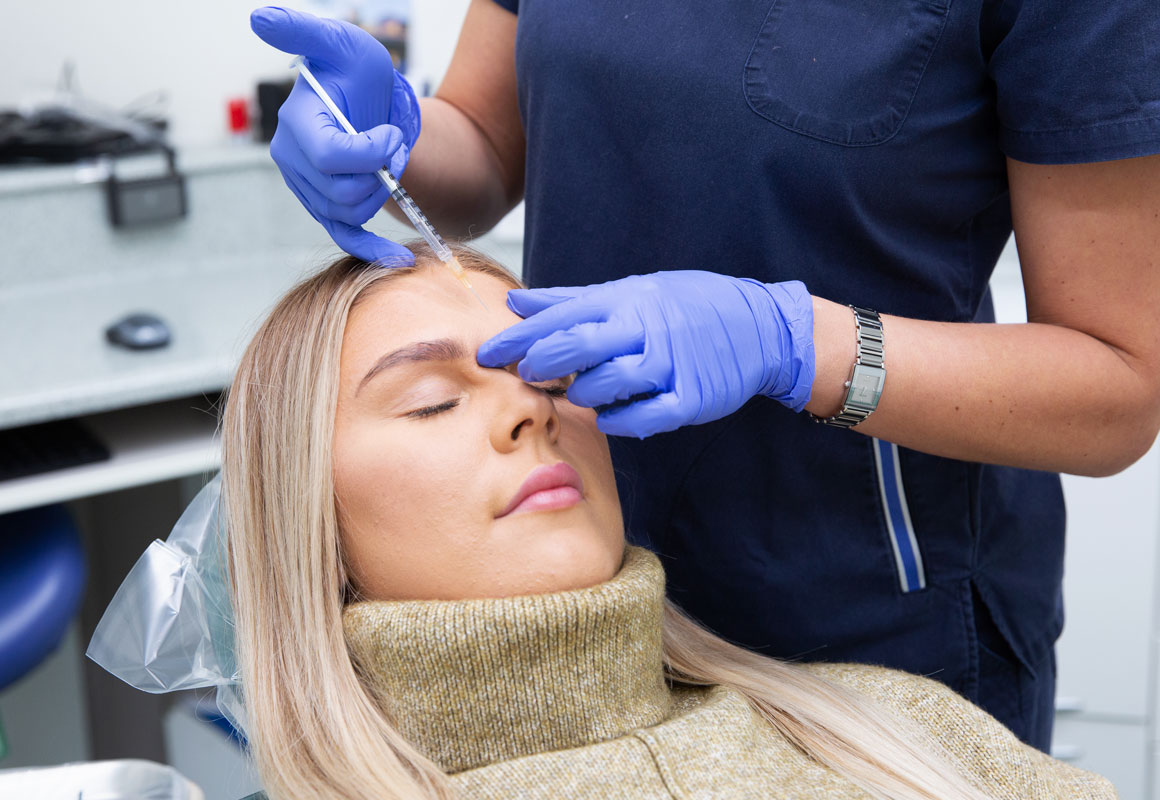
Nasolabial folds and marionette lines develop because the fat pads in the mid-face gradually shift downward with age. Gravity is entirely uninterested in our feelings about this. As those pads migrate, the skin above folds over, creating the shadows that pull the lower face down. No amount of whitening addresses that. Dermal fillers can, by restoring the volume that was doing the structural work in the first place. Patients sometimes wonder why they should come to a dental surgery for this rather than a clinic or a salon. The honest answer is that no specialty studies the anatomy of the face more closely than dentistry. I spend my career mapping the nerves, muscles and bone structures of the head and neck. I know exactly where the facial artery sits, how the lip moves during speech, where the tissue is dense and where it is not. When precision matters, and with injectable treatments it matters enormously, that knowledge is not incidental. It is the whole job.

It is quite a common thing to see in our consultation chair. Someone comes in convinced they need whitening, or perhaps some composite bonding work. But as we talk and watch their face in motion, what becomes clear is that it is not really the teeth bothering them at all. It is the shadows that have settled around the mouth. The lines running from the nose to the corners of the lips, or the ones tracking further down towards the chin. These can pull the energy of the face downwards even when the person in front of you feels perfectly cheerful on the inside. Softening those lines is not about trying to reverse the clock to your twenties. Nobody wants to walk through Cheltenham looking oddly preserved. The goal is far more measured than that. It is about restoring volume that has quietly disappeared over the years, so that the face looks cared for and refreshed rather than reconstructed. The analogy I find myself using most often is a cushion that has gradually lost its stuffing. You do not want to overfill it until it is stiff and wrong. You just want to smooth the fabric back out so it sits properly again.

What the Treatment Actually Involves

The first appointment is mostly a conversation. I want to understand what you see when you look in the mirror, not just which line is bothering you, because quite often the two things are not the same. A patient will point to a fold and say they hate it, but when we assess the face properly, the better answer is a small amount of volume added to the cheek. That then lifts the overlying skin and softens the fold from above, without touching it directly. Targeting symptoms rather than causes is exactly how results end up looking unconvincing. The material we use is almost always hyaluronic acid. It sounds more clinical than it is. It is a sugar molecule the skin produces naturally, its job being to hold moisture in the tissue. The synthetic version behaves the same way. It integrates, holds water, and over the course of several months the body gradually absorbs it. This is not a permanent commitment, which actually matters quite a lot, because faces continue to change and treatment ought to be able to change with them.

My preference is always to do less at the first appointment and review, rather than attempt to correct over-treatment later. You can add volume at a follow-up without much difficulty. Removing it is a more involved conversation. Most patients see the result before they leave the surgery. There may be some minor swelling for a day or two, occasionally a small bruise, but the lifted and less-shadowed appearance is visible almost immediately. There is no recovery period, no need to stay indoors. You leave looking like yourself after a decent night’s sleep, which for the vast majority of people coming through the door is precisely the point. We should also talk about lip fillers, because they frequently come into the conversation when treating the lower face. With age, lips can lose their definition. The Cupid’s bow flattens slightly, and those small vertical lines above the lip, often called smoker’s lines even on people who have never smoked, start to appear. The worry here is always the exaggerated look. But in a proper clinical setting that is exactly what we are working to avoid. The aim is not volume for its own sake. It is restoring the border, bringing back a bit of hydration, and giving your smile a clean and natural frame.

On Expectations and the “Frozen Face” Fear

The tabloid version of filler treatment, immobile, inflated and unconvincing, comes from volume applied without restraint, or from pairing heavy filler work with too many muscle-relaxing injections. It is a recognisable look precisely because the face stops moving correctly when the person speaks or laughs. That is what we are consistently working to avoid.

Good treatment respects how the face actually functions. Lips should still have shape at rest and look proportionate in conversation. Folds should be softened rather than erased entirely, because a completely line-free face on someone in their fifties does not look youthful, it just looks altered. The reference point is never youth in some abstract sense. It is the patient looking well-rested and like a natural version of themselves, rather than tired and drawn. There is a psychological dimension to this work that does not get discussed enough. We see patients who have been through a difficult period, perhaps some significant stress or a bout of weight loss, and the face has absorbed all of it. They feel that the person looking back from the mirror is not quite who they are. Restoring a degree of that lost volume can shift things considerably. It is about closing the gap between how somebody feels on the inside and what they see reflected back at them.

I remember a patient who came in last autumn. She was a teacher, always warm and smiling in conversation, but convinced that her face looked stern and disapproving when she was not actively laughing. She worried her students thought she was unhappy with them even when she was not. We placed a conservative amount of filler along the marionette lines and at the corners of the mouth. She came back a week later, not to report compliments about looking different, but because nobody had noticed she had done anything at all. Her husband had asked whether she had changed her skincare routine because she looked well. That is the outcome we are aiming for every time. If the people closest to you cannot identify what has changed, only that something has, then the work has been done properly. We take a very conservative approach here and always have done. You can add a little more at a follow-up appointment if you feel you want slightly more lift. Starting from too much and working backwards is not how we prefer to operate. The goal is for you to leave the surgery feeling settled and confident, not scrutinising yourself in every mirror. Your face is specific to you, and any treatment should keep it that way. If you have been thinking about whether this might be right for you, the simplest thing is to come in and have a proper conversation. No pressure, no obligation. We look at your face together, discuss how the muscles move and what is actually going on beneath the surface, and explain clearly what we would do and precisely why. We are a clinical environment with proper lighting, proper equipment and proper training, not a salon offering treatments as an afterthought. That distinction matters when it is your face being discussed.

The lower face is the frame for your smile, and it deserves the same attention as the teeth inside it. If softening a few lines makes you feel more like yourself again, that is a genuinely worthwhile thing. We see it in how people hold themselves differently when they leave. They stand a little straighter. They smile without thinking twice about it. And as dentists, there is very little we find more satisfying than that.